
FIRE MITIGATION TRUCKEE, CA
Fire Mitigation Truckee Services
Fire mitigation Truckee services for homes and properties throughout Truckee and North Lake Tahoe, including brush clearing, pine needle removal, smaller vegetation work, and cleanup. Call today for a fast, free estimate.
- Licensed & Insured
- Locally Owned
- Serving Since 2016
Get Your Free Quote
By submitting this form, you agree to our Terms of Use including consent to receive calls regarding your free estimate.
Tahoe Defensible Space provides fire mitigation services for homes, cabins, rental properties, second homes, and vacant lots throughout Truckee and North Lake Tahoe. Our work is focused on the vegetation and debris that can be addressed directly at the property level: brush, dry or dead smaller vegetation, pine needles, cones, leaves, branches, slash, and other accumulated surface material. We also clear practical access around structures, driveways, paths, and work areas when those items are part of the agreed scope.
Fire mitigation is not one identical checklist for every parcel. A compact cabin lot may need detailed cleanup close to the structure, while a larger wooded property may have several brush pockets, long driveway edges, and open areas that need selective clearing. Customers often combine defensible space work with brush clearing and debris haul-away. We build the estimate around the actual condition of the site and the priorities the owner is trying to address.
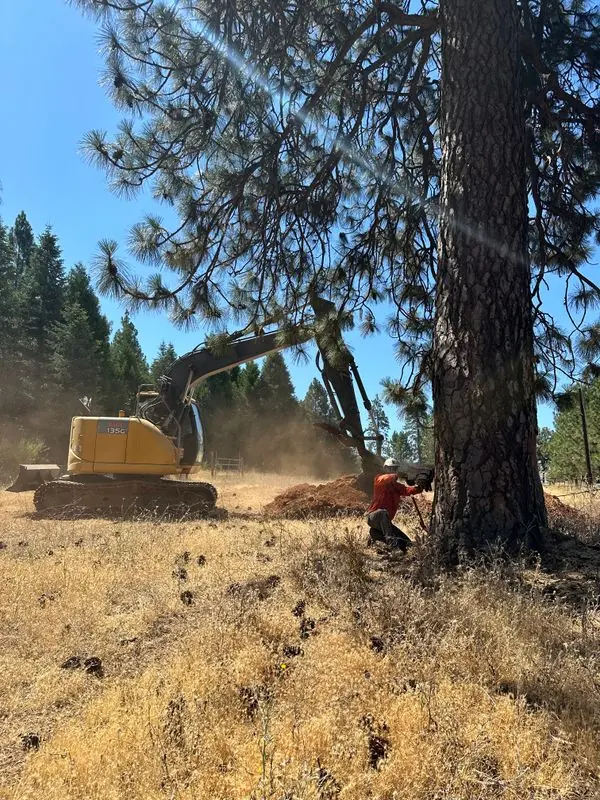
Property-Level Fire Mitigation Planning
A useful fire mitigation plan starts by separating the property into manageable work areas. We look at the space nearest the home, the transition to surrounding vegetation, driveways and access, decks and stairs, utility areas, fence lines, and any locations where dead material has accumulated. If the owner has a defensible space inspection or written work list, that document can be used to organize the estimate so each requested item is easy to identify.
For Truckee-area properties, Truckee Fire Protection District publishes current defensible-space guidance and inspection information. Other communities may be served by different agencies, so property owners should confirm the rules and inspection process that apply to their address. Our role is to complete the vegetation and cleanup work in the agreed scope, not to issue compliance certifications or substitute for the fire agency.
When no inspection report exists, we can still prioritize obvious maintenance needs. Dense brush, dry surface debris, dead small growth, vegetation crowding the structure, and narrow access corridors are common places to begin. The estimate can separate essential work from optional cleanup so the owner can decide whether to complete everything at once or phase the project.
Reducing Continuous Brush and Smaller Vegetation
Brush can create a continuous layer of vegetation between wooded portions of a lot and the areas people use every day. On mountain properties it may fill open slopes, grow beside retaining walls, crowd driveway shoulders, or collect beneath taller trees. Our brush clearing and removal work focuses on cutting the agreed material and moving it out of the work area rather than simply flattening it and leaving the debris in place.
Smaller vegetation may also need selective removal where it is dead, overly dense, blocking access, or creating a continuous path through the property. We do not assume every shrub or sapling should be removed. The owner can identify vegetation they want retained, and the estimate can describe areas to thin, clear, or leave untouched. That makes the finished property look intentional rather than scraped bare.
On steeper lots, brush cutting and material handling are often the labor-intensive part of the job. Cut material has to be controlled, gathered, and carried to a safe loading or consolidation point. We account for that movement when estimating instead of pricing solely from the visible square footage.
For fire mitigation services, the most useful estimate is built from the condition of the property rather than a generic package. Photos should show the full work area, the route to the street or driveway, and any obstacles that affect access. If there are several separate work zones, identify them individually so the scope can explain which areas are included and which are optional.
Needles, Slash, and Ground-Fuel Cleanup
Surface cleanup is a major part of many mitigation projects. Pine needles, cones, bark, leaves, twigs, and small branches can build up beneath shrubs, along foundations, against landscape borders, around rock outcrops, and at the downhill edge of a property. Older layers may be packed by snow or moisture and require more hand work than a fresh seasonal cleanup.
We can include pine needle removal with brush work so the property is not left with clean vertical vegetation but heavy debris on the ground. Slash from earlier pruning can be collected at the same time, and loose branches or small piles can be moved to the loading area. If there is a substantial quantity of pre-existing material, yard debris removal can be identified separately so the hauling volume is clear.
The finished level matters. Some areas can be blown or raked clean, while natural wooded ground may be left with a light maintained layer rather than being stripped to mineral soil. We discuss that expectation before work starts, especially on properties where erosion, landscaping, or appearance is a concern.
Before work begins, owners should point out irrigation, landscape lighting, buried pet fencing, utilities, fragile plantings, gates, and any area that should remain untouched. That site information is especially important on mountain properties where vegetation can hide features from view. A clear walkthrough reduces rework and lets the crew focus on the agreed fire mitigation services tasks.
Working Around Slopes, Structures, and Mountain Access
Truckee and Tahoe lots often combine steep ground with narrow roads, tight side yards, mature trees, rocks, snow-storage areas, and limited places to stage a vehicle or trailer. Those conditions shape how quickly material can be cut and removed. A brush patch ten feet from a driveway is different from the same patch downhill behind a house where every load must be carried through a gate or up stairs.
We also plan around structures and site features. Decks, fences, irrigation, landscape lighting, propane equipment, utility boxes, and retaining walls can require slower hand work. Customers should point out buried irrigation, pet fencing, or other features that may not be visible before cutting starts. Good site information reduces the chance of unnecessary disturbance and makes the estimate more accurate.
Seasonal conditions can change access. Spring snowbanks, wet ground, summer dust, and fall needle drop all affect the work. We schedule based on the property as it exists when the job is ready, and we may adjust the sequence if weather or site access makes one area more practical to complete first.
The final condition should also be agreed in advance. Natural wooded ground may receive a practical cleanup while maintained areas near the home receive more detailed raking and collection. Haul-away, on-site consolidation, and any pre-existing debris piles should be stated in the estimate. Defining the finish keeps fire mitigation services from turning into an open-ended cleanup request.
Scheduling, Estimates, and Inspection Preparation
Free estimates are based on material density, work area, slope, access, debris volume, and the level of cleanup requested. When possible, send photos from several angles, including the route from the work area to the driveway or street. A close-up of brush is useful, but a wide photo showing the whole slope or yard is usually more valuable for estimating labor and hauling.
If the project is tied to an inspection, real-estate transaction, rental requirement, or planned construction date, tell us the deadline at the start. We can then explain what scheduling is realistic and which portions of the work should be prioritized. For properties with a written inspection report, sharing the report can also reduce ambiguity about the requested items.
We aim to make the scope specific: what gets cut, what gets raked, what gets hauled, and what stays. That helps avoid the common problem where “fire mitigation” means one thing to the owner and something much broader to the contractor.
Remote owners can make the process easier by sending recent photos and noting any access code, property-management contact, or scheduling restriction before the estimate. If the work is being completed for an inspection, transaction, guest arrival, or another contractor, share the target date. We can then prioritize the most important fire mitigation services items and explain what can realistically be completed in that window.
What We Handle and When Tree Work Is Separate
Our core work includes brush clearing, smaller vegetation cleanup, surface-fuel removal, pine needle cleanup, yard debris removal, and lot and property clearing where the vegetation is within our equipment and crew scope. We can combine these services on one estimate or separate them by area so the owner can phase the project.
Large or technical tree removal is a separate trade and is not advertised as a Tahoe Defensible Space service. Mature-tree removal, hazardous trees, complex rigging, and similar jobs should be handled by a tree-service provider equipped for that work. We can refer larger tree-removal inquiries to a dedicated tree-service provider.
For fire mitigation involving brush, needles, dead smaller vegetation, slash, and property cleanup, call (530) 270-4319 for a free estimate in Truckee and North Lake Tahoe.
Professional fire mitigation services for Truckee and North Lake Tahoe properties, with clear scopes, free estimates, and cleanup planned around the site.
Service Areas: Truckee & North Lake Tahoe
Let's get started.
Frequently Asked Questions About Fire Mitigation Services
What is included in fire mitigation work?
Fire mitigation can combine brush clearing, pine needle removal, dead vegetation cleanup, small-growth reduction, and debris removal based on conditions around the home and property.
Is fire mitigation the same as defensible space?
They overlap, but the scope can differ. Defensible space is organized around vegetation and combustible material near structures, while a broader mitigation project may also address access routes, overgrown sections of the lot, and accumulated surface fuels.
When is the best time to schedule the work?
Earlier seasonal scheduling usually provides more flexibility, but cleanup can be useful whenever weather, access, and site conditions allow. Inspection or transaction deadlines should be mentioned when requesting an estimate.
Do you guarantee an inspection will pass?
No contractor should guarantee an inspection outcome. We complete the agreed clearing scope, while the property owner and inspecting authority determine the applicable requirements and final compliance.